
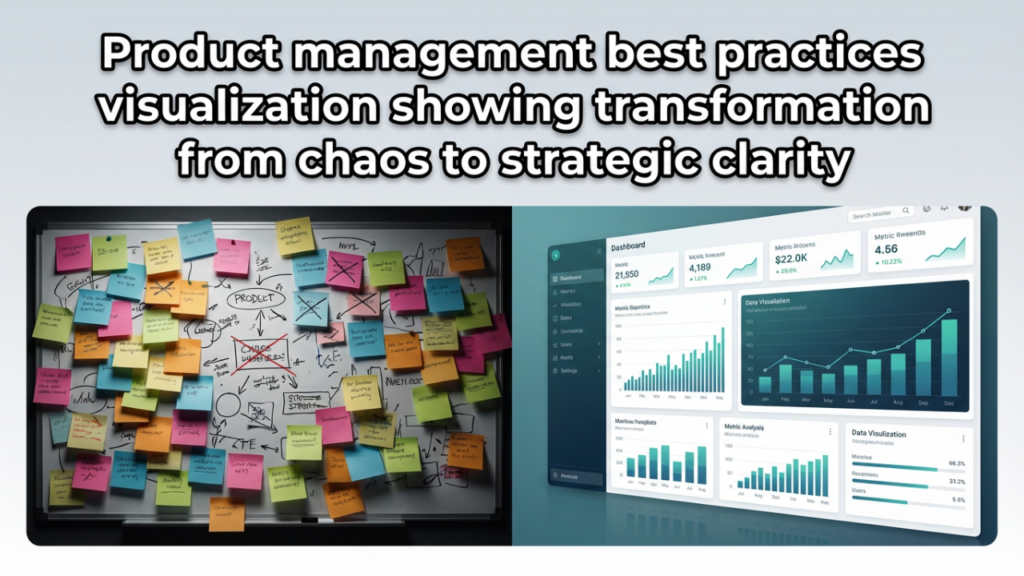
Master product management best practices in 2026. Learn feature prioritization, AI tools, metrics tracking, and stakeholder alignment strategies that drive real results.
Key Takeaways
Product management best practices center on customer-driven decisions, data-informed prioritization, and cross-functional alignment. This guide reveals frameworks, tools, and strategies that transform tactical PMs into strategic leaders who ship products users love.
The PM Crisis Nobody Talks About
Here’s the uncomfortable truth: 73% of product features are rarely or never used.
You’re buried in stakeholder requests. Your roadmap looks like a wish list. Teams sprint toward outputs nobody measures.
Sound familiar?
This isn’t a productivity problem. It’s a product management best practices problem. And it’s costing companies millions in wasted engineering hours while competitors who nail these fundamentals are capturing market share.
The promise? By implementing proven product management best practices, you’ll shift from feature factories to outcome engines. You’ll learn to say “no” with data, align chaotic stakeholders, and measure what actually matters.
The benefit? Your products will finally solve real problems instead of collecting digital dust.
Let’s fix this.
What Product Management Best Practices Actually Mean in 2026
Product management best practices aren’t buzzword collections. They’re battle-tested systems for making better decisions under uncertainty.
Think of them as your operating manual. While amateur PMs guess what to build next, pros following product management best practices use frameworks like RICE scoring to rank features objectively. Where rookies chase vanity metrics, veterans track leading indicators that predict revenue.
The difference shows up fast. Teams practicing solid product management best practices ship 40% faster because they’ve eliminated thrash. They kill bad ideas early. They validate assumptions before writing code.
Here’s what changed in 2026: AI tools now analyze customer feedback at scale. Remote-first collaboration demands async documentation. Outcome-focused metrics replaced feature-count celebrations.
But the core product management best practices remain timeless: understand users deeply, prioritize ruthlessly, communicate clearly.
Core Responsibilities of a Product Manager in 2026
Your job title says “manager” but you manage nothing directly.
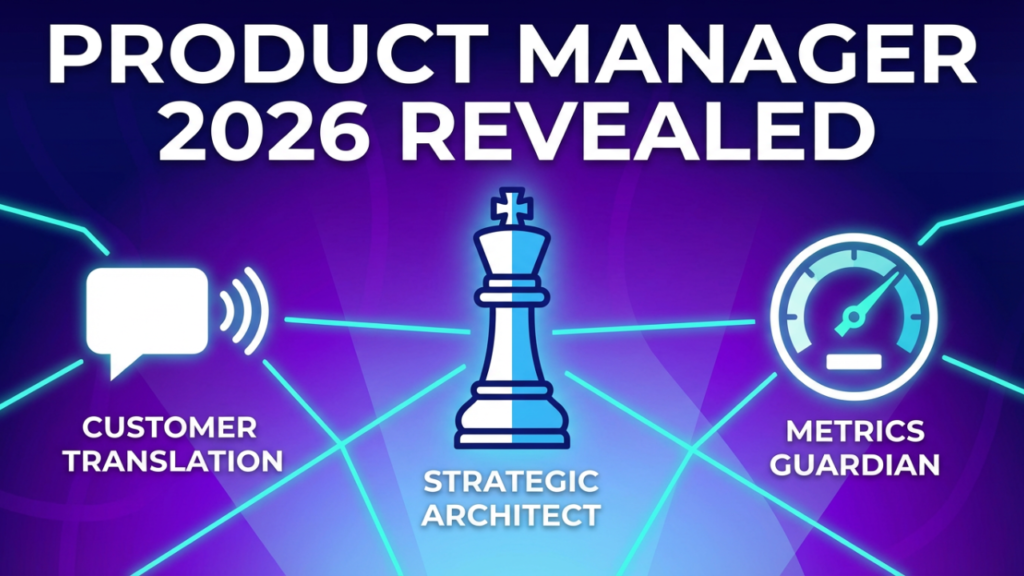
Strategy architect comes first. You define where the product goes and why it matters. This means writing crisp product vision statements that engineering can rally behind and executives can fund.
Customer translator ranks second. You spend 30% of your week in user research—interviews, usability tests, feedback analysis. Following product management best practices means you become the voice of customers in every planning meeting.
Decision firewall protects your team. You filter 100 requests down to the 5 that move metrics. You say no to the CEO’s pet feature when data doesn’t support it. This requires frameworks, not feelings.
Metrics guardian measures everything. You instrument products to track activation, retention, and monetization. You build dashboards that expose truth, even when truth hurts.
Alignment orchestrator keeps chaos at bay. You run workshops where design, engineering, marketing, and sales agree on priorities. Product management best practices emphasize stakeholder management because misaligned teams ship fragmented experiences.
What’s new in 2026? AI assists with synthesis, not replacement. You’ll prompt tools to analyze 500 support tickets and surface themes. But judgment calls about trade-offs? Still human.
The role demands technical fluency without being an engineer. Business acumen without an MBA. Design sense without being a designer.
Generalists who can zoom between 30,000-foot strategy and pixel-level details win.
Feature Prioritization Frameworks That Actually Work
Stop building what’s loudest. Start building what matters.
Here’s the dirty secret: most roadmaps reflect who yelled most recently, not what customers need. Product management best practices demand structured prioritization.
RICE Scoring Method
This framework saved me from a $2M mistake.
Calculate: Reach × Impact × Confidence ÷ Effort
- Reach: How many users in next quarter? (1,000 users = 1,000 points)
- Impact: Massive (3), High (2), Medium (1), Low (0.5)
- Confidence: Your certainty as percentage (100%, 80%, 50%)
- Effort: Person-months to ship
Example: A payment flow redesign might score (5000 × 3 × 0.8) ÷ 2 = 6,000. Compare that against every feature request.
The RICE advantage? Removes emotional arguing. Forces quantification. Exposes assumptions.
Kano Model for Delight vs. Necessity
Not all features are equal. Kano categorizes them:
Basic expectations: Missing these creates anger (security, speed). Present? Silence.
Performance attributes: More is better (search accuracy, load times). Linear satisfaction.
Delighters: Unexpected joys (thoughtful error messages, easter eggs). Disproportionate happiness.
Product management best practices suggest balancing all three. Fix basics first. Optimize performance second. Sprinkle delight strategically.
The MoSCoW Matrix for Stakeholder Chaos
When everyone wants everything, use MoSCoW:
- Must Have: Non-negotiables for launch
- Should Have: Important but not critical
- Could Have: Nice-to-haves if time allows
- Won’t Have: Explicitly deferred
I run this exercise in 60-minute workshops. Stakeholders argue, compromise, and leave aligned. Product management best practices thrive on transparent prioritization.
Value vs. Effort Matrix
The classic 2×2 grid still works.
Quick wins (high value, low effort): Ship immediately. These build momentum.
Big bets (high value, high effort): Your strategic initiatives. Allocate dedicated sprints.
Fill-ins (low value, low effort): Technical debt, polish. Slot between big work.
Money pits (low value, high effort): Kill these. They’re career killers disguised as features.
Reality check: I’ve seen teams spend 6 months on “money pit” features because they didn’t prioritize systematically.
Which framework works best? Combine them. Use RICE for scoring, Kano for customer impact, MoSCoW for stakeholder buy-in.
The Product Roadmap: Your North Star Document
Roadmaps are promises written in sand. Weather changes them, but direction holds.
Product management best practices treat roadmaps as living documents, not gospel. Update quarterly, review monthly, communicate weekly.
Three Roadmap Horizons
Now (0-3 months): Committed work. Engineering has specs. Design is finalized. You’re 80% confident on delivery.
Next (3-6 months): Directional themes. Less detail, more flexibility. Stakeholders understand these might shift.
Later (6-12 months): Strategic bets. Paint vision without over-committing. Reserve right to pivot based on learnings.
This structure manages expectations while maintaining agility.
Outcome-Based Roadmaps vs. Feature Lists
Bad roadmap: “Build AI chatbot, launch mobile app, redesign dashboard.”
Good roadmap: “Reduce support tickets 40% through self-service, increase mobile engagement 25%, improve trial conversion 15%.”
See the difference? Outcomes describe the destination. Features describe one possible vehicle.
Product management best practices emphasize outcomes because they preserve optionality. Maybe you hit that support reduction goal through better documentation, not a chatbot. The outcome matters; the feature is negotiable.
Tools for Collaborative Roadmapping
Aha! excels at strategy visualization. Link initiatives to company goals. Score features with built-in RICE calculators.
Productboard consolidates customer feedback. Every feature request ties to user quotes, making prioritization defensible.
Roadmunk creates presentation-ready timelines. Stakeholders understand Gantt-style layouts instantly.
Notion offers flexibility. Build custom roadmap views, embed PRDs, and maintain single source of truth.
I’ve used all four. Pick based on company size and complexity. Startups need Notion’s flexibility. Enterprises need Aha!’s governance.
The Roadmap Communication Playbook
Share roadmaps monthly in three formats:
Executive summary: One slide. Highlights progress, shifts, and blockers. Takes 3 minutes to present.
Team deep-dive: Full context. Why decisions changed. What data informed pivots. Builds trust.
Customer preview: High-level themes only. Avoid specific dates. Manage expectations proactively.
Warning: Never promise specific features on specific dates publicly. You’ll regret it when priorities shift or complexity explodes.
Product Requirements Documents (PRDs) That Engineers Actually Read
Most PRDs suck. They’re either 50-page novels nobody reads or vague paragraphs that spawn confusion.
Product management best practices demand PRDs that answer five questions:
The Five Essential Sections
1. Problem Statement (The “Why”)
What user pain are we solving? Quantify it. “Support receives 200 password reset tickets weekly, costing $8,000/month in agent time.”
2. Success Metrics (The “How We’ll Know”)
Define done numerically. “Reduce password reset tickets 60% within 8 weeks post-launch.”
3. User Stories (The “Who”)
Format: “As a [user type], I want to [action] so that [benefit].”
Example: “As a returning customer, I want password-less login so I can access my account in under 10 seconds.”
4. Functional Requirements (The “What”)
Bulleted specs. “System must send magic link to registered email within 30 seconds. Link expires after 15 minutes. Failed attempts lock account after 5 tries.”
5. Out of Scope (The “What We’re NOT Doing”)
Critically important. Prevents scope creep. “We are NOT building social login, biometric authentication, or account recovery via phone.”
PRD Best Practices for 2026
Keep it scannable. Engineers read diagonally. Use headers, bullets, and bold text liberally.
Link to research. Embed user interview clips. Reference analytics dashboards. Show, don’t just tell.
Include mocks. Partner with design early. Visual specs prevent misinterpretation.
Version control. Track changes. Engineers need to know what shifted between review and build.
Invite questions. Add a “FAQ” section anticipating engineering concerns.
Template recommendation: Use Notion or Coda for interactive PRDs. Embed Figma prototypes, Amplitude charts, and Loom videos directly in the document.
I’ve written 200+ PRDs. The ones that worked best read like stories: problem → impact → solution → success criteria. Clear, concise, compelling.
User Research: Moving Beyond “Users Want Features”
Users don’t want features. They want problems solved.
Product management best practices treat user research as continuous discovery, not one-time projects.
Customer Interview Techniques
The “Jobs to Be Done” framework reveals why customers “hire” your product. Ask: “What were you trying to accomplish? What alternatives did you consider? What made you choose us?”
Avoid leading questions. “Would you use a dark mode?” is garbage. “Walk me through your evening workflow” uncovers whether dark mode matters organically.
Record everything. Use Loom or Zoom transcripts. Tag insights in Dovetail or Notion. Your future self will thank you.
Interview 5-7 users per persona monthly. This cadence surfaces patterns without overwhelming your calendar.
Surveys vs. Interviews: When to Use Each
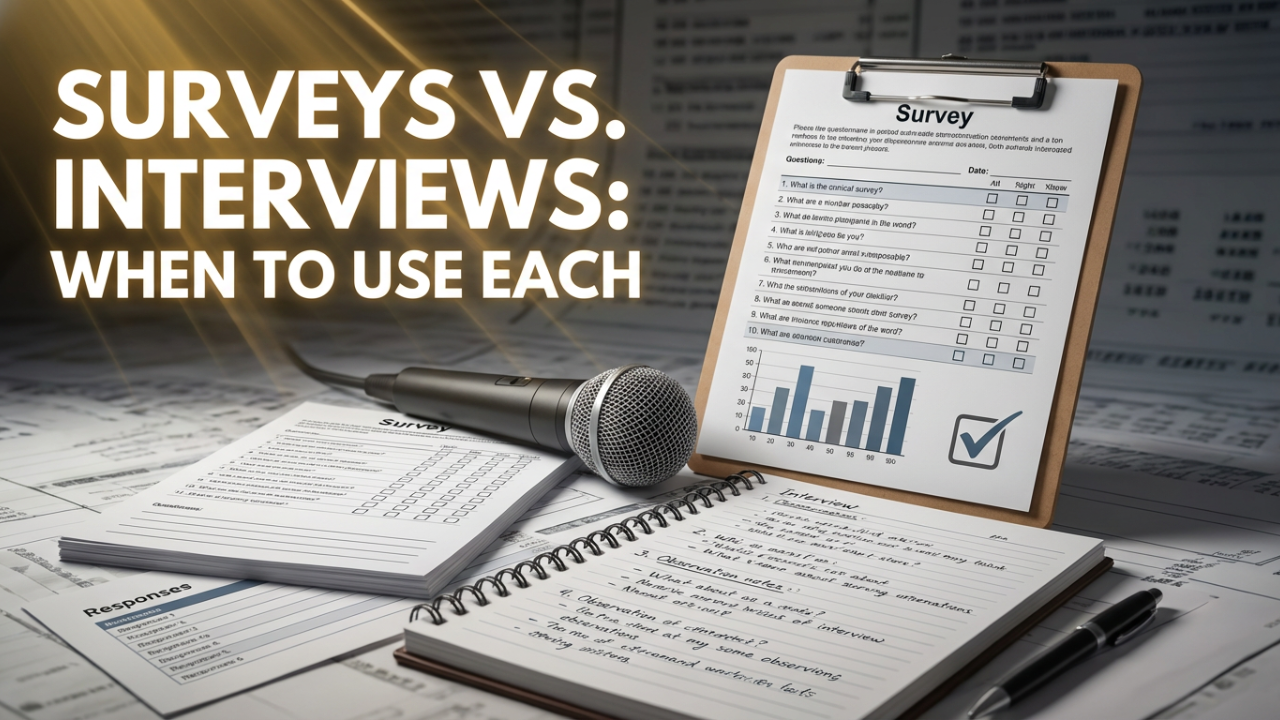
Surveys quantify. “Do 60% of users experience this problem?” Great for validation after interviews.
Interviews qualify. “Why does this problem matter?” Reveals emotional drivers surveys miss.
Product management best practices suggest interviewing first, then surveying to confirm scale.
Tools for Continuous Customer Discovery
UserTesting provides on-demand user videos. Upload a prototype, get 5 recorded sessions within hours.
Hotjar records session replays. Watch where users rage-click or abandon flows.
Intercom embeds in-app surveys. Ask “How did this feature help you?” immediately after use.
Pendo tracks feature adoption. Identify which capabilities users ignore—then interview to learn why.
The best PMs I know spend 8-10 hours weekly in research. It’s not extra work; it’s the work.
Metrics and KPIs: Measuring What Matters
“Revenue is up!” tells you nothing about product health.
Product management best practices separate vanity metrics from actionable insights.
Leading vs. Lagging Indicators
Lagging indicators report outcomes: revenue, churn, NPS. They’re retrospective.
Leading indicators predict outcomes: activation rate, feature adoption, engagement frequency. They’re real-time.
Smart PMs optimize leading indicators that correlate with lagging ones. If weekly active users predict retention, focus there.
The Pirate Metrics Framework (AARRR)
Acquisition: How many users sign up? Cost per acquisition (CPA)?
Activation: What % complete critical first action (aha moment)?
Retention: Who comes back daily, weekly, monthly?
Revenue: Which segments convert to paid? Average revenue per user (ARPU)?
Referral: Do users bring friends? Viral coefficient?
Product management best practices involve instrumenting every stage, then improving the weakest link.
Product-Specific KPIs for 2026
B2B SaaS: Time to value, seats per account, expansion revenue
Consumer apps: Daily active users (DAU), session length, 7-day retention
Marketplaces: Gross merchandise value (GMV), take rate, repeat transaction rate
Choose 3-5 KPIs maximum. More dilutes focus. Product management best practices demand clarity.
Dashboard Design for Decision-Making
Build dashboards in layers:
Executive view: 5 numbers, updated weekly. Red/yellow/green indicators.
PM view: 20+ metrics, real-time. Allows deep-dive investigation.
Team view: Metrics each function influences (engineering: performance, marketing: acquisition).
Tools: Amplitude for behavioral analytics, Mixpanel for cohort analysis, Looker for custom SQL queries.
I review my PM dashboard every morning. Takes 5 minutes. Surfaces problems before they metastasize.
Stakeholder Management: The Underrated Superpower
You can build the perfect feature. Wrong stakeholder alignment? It dies.
Product management best practices recognize that PMs succeed through influence, not authority.
Handling Conflicting Priorities
The prioritization workshop: Lock stakeholders in a room (virtually works too). Present RICE scores. Force rank order together. Document decisions publicly.
The data arbitrator: “Sales wants feature X. Marketing wants Y. Let’s review which moves our Q3 retention goal more.”
The roadmap FAQ: Preempt objections. “Why aren’t we building [popular request]? Here’s the data that showed lower impact.”
Transparency builds trust. Hiding prioritization logic breeds resentment.
Communication Patterns for Busy Executives
The 3-bullet update: Weekly email. What shipped, what’s at risk, what decisions you need. Under 100 words.
The visual roadmap: Execs think visually. Use Roadmunk or Aha! to create timeline views. Colors indicate confidence levels.
The proactive flag: Don’t surprise leadership. If a launch slips, tell them immediately with recovery plan attached.
I’ve seen PMs fired for poor communication despite shipping great products. Perception matters.
Building Cross-Functional Relationships
Weekly design sync: Review mocks, debate trade-offs, align on user experience.
Bi-weekly engineering happy hour: Casual conversations reveal technical constraints formal meetings miss.
Monthly marketing preview: Show what’s coming so campaigns launch coordinated.
Quarterly sales training: Teach reps how to demo new features. They’re your frontline researchers.
Product management best practices treat collaboration as infrastructure, not afterthought.
AI Tools for Product Managers in 2026
AI won’t replace PMs. But PMs using AI will replace those who don’t.
Product management best practices now include AI-augmented workflows for speed and scale.
Synthesis at Scale
ChatGPT + Claude for feedback analysis: Paste 50 support tickets. Prompt: “Identify top 3 recurring issues and suggested solutions.” Get themes in seconds.
Amplitude’s AI insights: Automatically surfaces drop-off points and segments with unusual behavior.
Dovetail’s research repository: AI tags interview transcripts by theme, making patterns visible across 100+ conversations.
Copy-Paste Prompt Blocks
Prompt 1: User Story Generator
Context: I'm building [feature name] to solve [user problem].
Target user: [persona description]
Goal: [desired outcome]

Generate 5 user stories in this format:
"As a [user type], I want to [action] so that [benefit]."
Make them specific and testable.
Prompt 2: PRD Outliner
Feature: [name]
Problem: [user pain point]
Success metric: [KPI to move]

Create a PRD outline with these sections:
1. Problem statement with quantified impact
2. User personas affected
3. Functional requirements (10 bullets)
4. Non-functional requirements (performance, security)
5. Out of scope items
6. Success criteria
7. Open questions for engineering
Prompt 3: Competitive Analysis
Analyze [competitor product] focusing on:
- Core features and workflows
- Pricing model and tiers
- Target customer segments
- Key differentiators
- Gaps our product could exploit

Format as comparison table with our product.
What AI Gets Wrong
Hallucinated data: AI invents statistics confidently. Always verify numbers.
Missing context: It doesn’t know your customer contracts, legacy architecture, or org politics.
Generic recommendations: Frameworks sound right but lack specificity. Your judgment adapts them.
Product management best practices treat AI as research assistant, not decision-maker.
Implementation Roadmap: Your First 90 Days
Adopting product management best practices isn’t a one-day decision. It’s a systematic upgrade.
Week 1-2: Audit Current State
Step 1: Review your last 5 product decisions. What data informed them? Where did you guess?
Step 2: Interview 3 engineers, 2 designers, 1 sales rep. Ask: “What’s unclear about our roadmap?”
Step 3: List every metric you track. Identify which are vanity vs. actionable.
Week 3-4: Establish Frameworks
Step 4: Introduce RICE scoring in next planning session. Score top 10 backlog items together.
Step 5: Create PRD template using best practices outlined above. Share with team for feedback.
Step 6: Build basic dashboard tracking 5 key metrics. Use Amplitude or Mixpanel.
Week 5-8: Embed Rituals
Step 7: Schedule monthly user interviews (5 per cycle). Block calendar now.
Step 8: Launch weekly stakeholder updates using 3-bullet format. Set expectation for response time.
Step 9: Run first prioritization workshop with cross-functional team. Document outcomes publicly.
Week 9-12: Optimize and Scale
Step 10: Analyze first quarter results. Which practices improved velocity? Which felt like busywork?
Step 11: Train teammates on frameworks. Share RICE template, PRD format, research process.
Step 12: Publish internal “Product Management Best Practices” guide. Make it living document.
Reality check: This takes discipline. You’ll slip back to reactive mode. That’s normal. Product management best practices become habits through repetition, not perfection.
Product Management vs. Project Management: Know the Difference
Confusion here derails careers.
Project managers ensure things happen on time and budget. They own execution, timelines, and resource allocation.
Product managers ensure the right things happen. They own vision, prioritization, and customer outcomes.
Think of it this way: Project managers build the train schedule. Product managers decide where the train should go.
Overlap exists. Both need stakeholder management, communication skills, and analytical thinking. But the orientation differs fundamentally.
Product management best practices focus on discovery (what to build), not just delivery (how to build it).
In 2026, mature organizations separate these roles. Startups often blend them by necessity, not design.
Specialized Roles in Product Teams for 2026
Product management isn’t monolithic anymore.
Growth PMs optimize acquisition, activation, and monetization. They run experiments, analyze funnels, and obsess over conversion rates.
Platform PMs build internal tools and APIs. They serve engineering and design teams, balancing usability with technical constraints.
Data PMs focus on analytics products, instrumentation, and insights delivery. They partner with data science closely.
AI/ML PMs require technical depth in machine learning. They define training data requirements, evaluate model performance, and manage inference costs.
Product management best practices adapt to specialty. Growth PMs prioritize experiments per week; platform PMs prioritize developer experience metrics.
Career advice: Generalize first (2-3 years), then specialize based on strengths. Specialization commands higher compensation and clearer impact.
Measuring Outcomes vs. Outputs in Agile
Agile teams ship constantly. But shipping isn’t succeeding.
Outputs are things you build: features, sprints, story points.
Outcomes are changes you create: increased retention, reduced costs, improved satisfaction.
Product management best practices measure outcomes ruthlessly.
The Outcome Framework
For every initiative, define:
- Desired outcome: “Increase trial-to-paid conversion 20%”
- Leading indicator: “Improve onboarding completion rate to 60%”
- Output hypothesis: “Guided setup wizard will drive completion”
You build the wizard (output), measure completion rate (leading indicator), and confirm conversion lift (outcome).
If conversion doesn’t increase? You killed the hypothesis, not the outcome. Try different output.
This mindset shift transforms agile from feature factories into learning engines.
Tools for Outcome Tracking
Pendo instruments in-product analytics. Track feature adoption and correlate with business metrics.
Gainsight monitors customer health scores. Predict churn before it happens.
Amplitude builds cohort retention curves. See if new features improve long-term engagement.
Product management best practices demand instrumenting outcomes from day one, not after launch.
Essential Tools Comparison for 2026
Choosing the right tools accelerates best practices. Here’s how top solutions stack up:
| Tool | Best For | Speed | Cost | Accuracy |
|---|---|---|---|---|
| Jira | Agile tracking | Fast | $$ | High for sprint data |
| Aha! | Roadmapping | Medium | $$$ | High for strategy viz |
| Productboard | Feedback aggregation | Fast | $$$ | Medium (depends on input) |
| Amplitude | Behavioral analytics | Fast | $$$ | Very high |
| Mixpanel | Cohort analysis | Fast | $$ | High |
| Notion | Documentation | Fast | $ | Medium (manual entry) |
| UserTesting | User research | Medium | $$$ | High for qualitative |
| Hotjar | Session replays | Fast | $ | Medium (sample-based) |
| Pendo | In-app guidance | Medium | $$$ | High |
| Linear | Issue tracking | Very fast | $$ | High |
Budget allocation: Start with Notion (free), Amplitude (growth plan), and Hotjar (basic). Add specialized tools as team scales.
Field Notes: What Works in Practice
Theory sounds elegant. Reality is messier.
The framework trap: I once spent 3 weeks perfecting a RICE scoring model. Engineers ignored it because we didn’t involve them in creation. Product management best practices work when teams co-create them.
The metric mirage: Tracked 40 KPIs once. Paralyzed decision-making. Narrowed to 5 North Star metrics. Velocity doubled.
The stakeholder revolt: Presented roadmap as fait accompli. Sales and marketing felt ambushed. Now I preview individually before group presentation. Buy-in happens in small conversations, not big reveals.
The research revelation: First time watching users struggle with our “intuitive” interface crushed my assumptions. Now I make every engineer watch 2 user sessions monthly. Builds empathy product management best practices demand.
The AI reality check: Tried fully automating feedback analysis. Missed nuance. Now use AI for first pass, human review for final insights.
Biggest lesson? Product management best practices aren’t dogma. Adapt frameworks to your context, measure what matters in your business, communicate in ways your stakeholders prefer.
The 2026 PM Mindset Shift
Product management evolved from feature shepherds to strategic orchestrators.
Old mindset: “We need to build this because competitors have it.”
New mindset: “What outcome are we optimizing for, and what’s the highest-leverage way to achieve it?”
Product management best practices in 2026 center on:
- Ruthless prioritization over building everything
- Outcome obsession over output celebration
- Continuous discovery over big-bang research
- Cross-functional influence over top-down mandates
- AI-augmented synthesis over manual analysis
The PM who thrives doesn’t have the loudest voice. They have the clearest data, sharpest frameworks, and deepest customer understanding.
Your Next Steps: The PM Challenge
Reading about product management best practices won’t change anything. Application will.
Here’s your challenge for the next 7 days:
Day 1: Score your top 10 backlog items using RICE. Share results with your team.
Day 2: Interview one user. Ask about their goals, not features. Record it.
Day 3: Build a dashboard tracking 3 key metrics. Make it visible.
Day 4: Rewrite one PRD using the five-section format. Get engineering feedback.
Day 5: Run a 30-minute prioritization workshop with stakeholders. Use MoSCoW.
Day 6: Map one feature to its intended outcome. Define how you’ll measure success.
Day 7: Reflect. What worked? What felt uncomfortable? What will you keep doing?
Comment below: Which product management best practices challenge will you tackle first? What’s your biggest prioritization struggle right now?
The PMs who master these fundamentals don’t just ship products. They shape markets.
Your move.